

/PairaVoice-Start-A-Conversation-nobg-md.png?width=200&height=300&name=PairaVoice-Start-A-Conversation-nobg-md.png)



















.png)

.png)



 ChatGPT
 Google AI
 Perplexity
 Claude
 Grok
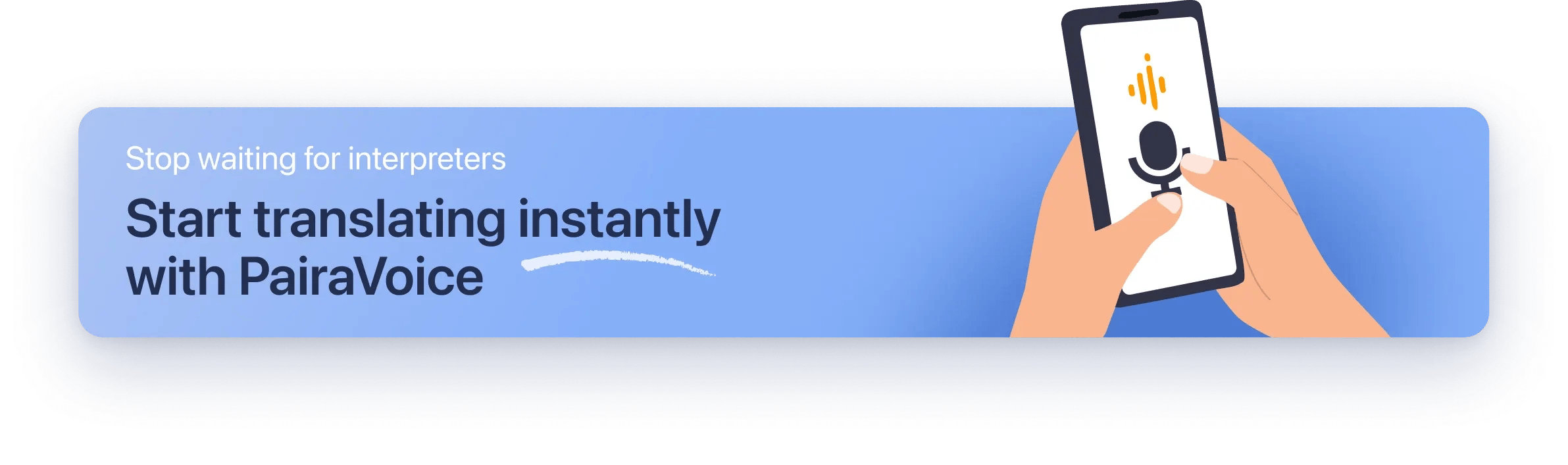
GrokSchools communicate with families constantly about attendance, enrollment, behavior, schedules, and student support. When those conversations happen across language barriers, even routine interactions can create confusion and leave families without clear next steps. Interpreting software helps schools respond in the moment with faster multilingual communication.
Instead of relying on scheduled support for every routine interaction, schools can use secure tools to communicate more consistently across languages. That can reduce delays, lighten the burden on staff, and make communication more accessible for families.
For districts and schools working to strengthen family engagement, support student success, and maintain FERPA-aligned workflows, interpreting software is becoming an increasingly practical part of multilingual communication.
Why schools need better language access
Many schools face the same challenge: they need to communicate with multilingual families often, but they do not always have enough internal language support to meet demand.
Front office teams, counselors, teachers, and administrators may all need language access at different times throughout the day. In many schools, that need is unpredictable, which makes it difficult to rely only on pre-scheduled interpreting support or a small number of bilingual staff members. Some conversations are planned, but many are not. A parent may arrive with a question about enrollment. A teacher may need to discuss attendance or behavior. A counselor may need to explain next steps to a student and family. In these moments, delays can create confusion, frustration, and missed opportunities for understanding.
Federal guidance has also made clear that schools must communicate important information to parents with limited English proficiency in a language they can understand.
Interpreting software helps schools respond more quickly by making multilingual communication available on demand for many everyday interactions.
Common school use cases for interpreting software
Interpreting software is especially useful when schools need timely communication but do not want every routine conversation to depend on interpreter scheduling.
Parent-teacher communication across language barriers
Teachers and school staff often need to communicate with families about classroom progress, attendance, assignments, behavior, or school expectations. That makes it easier to discuss progress, expectations, and concerns clearly while keeping families engaged in the student’s learning experience.
Enrollment and registration support for multilingual families
Registration offices frequently answer important questions about forms, required documents, school placement, transportation, and deadlines. Interpreting software can help registration teams answer questions more quickly during high-volume periods without sacrificing clarity.
Multilingual communication for counseling and student support
Counselors, social workers, and support staff may need to communicate clearly during sensitive conversations. In time-sensitive conversations, quicker language access can help staff respond with less delay and more clarity.
Front office language support for daily school operations
Not every multilingual interaction is a formal meeting. Schools also need language support for check-ins, pickup questions, schedule changes, nurse visits, and other everyday needs. Interpreting software allows staff to resolve common questions without pulling other employees away from their primary responsibilities.
Special education follow-up and family communication
When schools need to explain processes, next steps, or meeting logistics, communication clarity matters. While some situations may still require a professional human interpreter, interpreting software can help support routine follow-up conversations and day-to-day coordination around student services.
How schools can communicate more efficiently
One of the biggest benefits of interpreting software is speed.
Traditional interpreting workflows can involve scheduling, coordination, minimum booking requirements, and delays. That approach may still be appropriate for high-stakes or highly specialized conversations, but it is not always practical for routine school communication.
Interpreting software helps schools move faster by giving staff a way to start multilingual conversations immediately on the devices they already use. That means fewer bottlenecks, less back-and-forth, and more timely communication with families.
It also helps schools avoid over-relying on bilingual teachers, aides, or office staff to interpret on the spot. Those team members can be invaluable, but pulling them into frequent ad hoc conversations can interrupt their own work and create inconsistency across departments.
How interpreting software can help reduce costs
For many schools, language access affects both communication quality and budget planning.
Relying on scheduled interpreters for every interaction can become expensive and difficult to scale, especially when staff need support for shorter or more routine conversations throughout the day. For shorter, day-to-day interactions, interpreting software can offer a lower-friction option.
By helping schools handle more multilingual interactions in real time, interpreting software can reduce dependence on higher-cost interpreting workflows where they may not be necessary. It can also help staff spend less time waiting and more time resolving issues, supporting families, and keeping operations moving.
The result is a language access workflow that better fits the pace, staffing realities, and budget constraints of school environments.
What to look for in a district-ready solution
Not all interpreting software is designed for educational settings. Schools should look for a solution that fits naturally into daily workflows.
When evaluating interpreting software for schools, decision-makers should look for features that support speed, usability, continuity, and privacy, including:
-
Real-time two-way conversation support
-
Clear voice and text translation
- Easy mobile access for staff on the go
- Transcript access that supports follow-up and continuity when appropriate
- A simple experience for both professionals and families
- Security controls appropriate for school and district environments
-
FERPA-aligned workflows and data handling considerations
Schools should also look for software that is easy to use in real situations. If a tool is too complicated, requires extra hardware, or slows staff down, adoption becomes much harder.
/PairaVoice%20Parent%20Student%20Teacher%20Conference.png?width=676&height=327&name=PairaVoice%20Parent%20Student%20Teacher%20Conference.png)
How PairaVoice fits into school workflows
PairaVoice is designed for real-time multilingual communication in regulated settings, including education. For schools, it offers a mobile way to support two-way conversations across languages without relying on separate hardware or more cumbersome workflows. It also supports real-time speech transcription and translation and is designed with FERPA-aligned workflows in mind.
Here are a few ways PairaVoice aligns with common school communication needs:
Real-Time Multilingual Conversations
PairaVoice helps educators and staff communicate with parents, students, and guardians in real time, which can reduce delays and improve understanding during everyday school interactions. It supports instant two-way translated conversations in a mobile-first format.
Mobile-First and Easy to Use
Because PairaVoice is built as an iOS and Android mobile app, staff can use it where conversations actually happen: in the front office, in hallways, during meetings, or while supporting families in person. It also does not require external hardware, which makes adoption simpler.
Transcript Support
PairaVoice includes live transcription and saved transcript access in the professional version, which can help staff review conversations and maintain continuity when appropriate.
Flexible Communication Modes
PairaVoice supports single-device and two-device workflows, along with options for speaking or typing messages. That flexibility can help schools adapt the app to different environments and communication preferences.
Built for Regulated Settings
PairaVoice is positioned for educational and other regulated environments, with security and workflow considerations that support educational environments.
Privacy and compliance in school communication
Schools need to think carefully about privacy and data handling when choosing any communication technology.
That is why interpreting software for schools should not be evaluated only on speed or convenience, but also on whether it supports FERPA-aligned workflows, clear data practices, and the needs of educational environments where sensitive student and family information may be discussed.
A school-friendly solution should help teams communicate more effectively without creating unnecessary compliance concerns. For many districts, that means looking for software designed for regulated settings rather than relying on generic consumer translation tools.
When schools should use interpreting software
Interpreting software can be a strong fit for many everyday school interactions, especially when communication needs to happen quickly.
Examples include:
-
Routine parent questions about schedules, forms, or next steps
-
Front office and attendance support
-
Student services and counseling communication
-
Registration and enrollment assistance
-
Event and meeting coordination with families
-
Day-to-day family communication across departments
At the same time, schools may still prefer a professional human interpreter for certain high-stakes, legally sensitive, or highly nuanced conversations. The most effective language access strategy is often one that combines technology and human expertise appropriately.
Why language access matters for family engagement
When families cannot easily communicate with a school, the impact goes beyond inconvenience.
It can affect trust, responsiveness, participation, and access to information. It can also make schools more dependent on a small number of bilingual staff members who are already balancing many responsibilities.
Interpreting software helps schools create a more responsive communication experience for multilingual families. That can support stronger relationships, faster issue resolution, and a more inclusive school environment overall.
The bottom line
Schools need practical ways to communicate across languages without slowing down operations or increasing unnecessary complexity. Interpreting software helps meet that need by making multilingual conversations more immediate, more accessible, and easier to manage in daily school workflows.
For schools looking to improve family communication, reduce delays, support staff efficiency, and maintain FERPA-aligned practices, PairaVoice offers a modern approach to interpreting software designed for real-world educational settings. PairaVoice is positioned for educators and other frontline professionals, supports real-time conversation translation, and emphasizes secure, mobile-first communication without the overhead of legacy systems.
Looking for a better way to communicate with multilingual families? See how PairaVoice can help your school reduce delays, support staff, and make everyday communication across languages easier to manage.
FAQ:
What is interpreting software for schools?
Interpreting software for schools is technology that helps staff communicate with students, parents, and guardians across languages in real time. It is often used to support everyday conversations such as enrollment questions, parent communication, counseling support, and front office interactions.
How do schools use interpreting software?
Schools use interpreting software to make multilingual communication faster and more accessible. Common use cases include parent-teacher conversations, registration support, attendance follow-up, student services communication, and routine office interactions.
Can interpreting software replace human interpreters in schools?
Not always. Interpreting software can be a highly effective option for many routine conversations, especially when speed and convenience matter. However, schools may still prefer professional human interpreters for high-stakes, legally sensitive, or highly nuanced discussions.
Why is interpreting software important for family engagement?
Interpreting software helps schools communicate with multilingual families more quickly and more clearly. That can improve trust, reduce misunderstandings, and make it easier for families to stay informed and involved.
What features should schools look for in interpreting software?
Schools should look for interpreting software that offers real-time conversation support, mobile accessibility, transcript capabilities, ease of use, secure workflows, and FERPA-aligned considerations for educational settings.
Is PairaVoice designed for schools?
Yes. PairaVoice is positioned for regulated industries including education and is designed to support real-time multilingual conversations, speech transcription, transcript access, and mobile-first workflows for professionals on the go.