
















 ChatGPT
 Google AI
 Perplexity
 Claude
 Grok
Educational institutions are finding new ways to communicate across languages, and AI-powered translation is becoming an increasingly practical option. From parent-teacher conferences and school district offices to university student services, the ability to translate conversations in real time can make everyday interactions easier for students, families, and staff.
AI live translation for educational institutions allows people who speak different languages to communicate using translated speech and text, often through a mobile app. Instead of arranging language assistance for every routine question or conversation, staff can use these tools to communicate instantly when appropriate.
However, not every AI translation solution is equally suited to an educational environment. Accuracy, supported languages, student privacy, ease of use, and the availability of human interpreters all deserve careful consideration.
For districts and universities evaluating these tools, the goal is to choose technology that supports reliable communication, fits existing workflows, and can be used responsibly.
How does AI live translation work in educational settings?
AI live translation uses speech recognition and language translation technology to help people communicate in different languages.
When someone speaks, the application converts their words into text, translates the content into the selected language, and may read the translated message aloud. Many modern solutions also display translations on-screen, allowing users to listen and read simultaneously.
This process is often called real-time AI voice translation or AI-powered live interpretation.
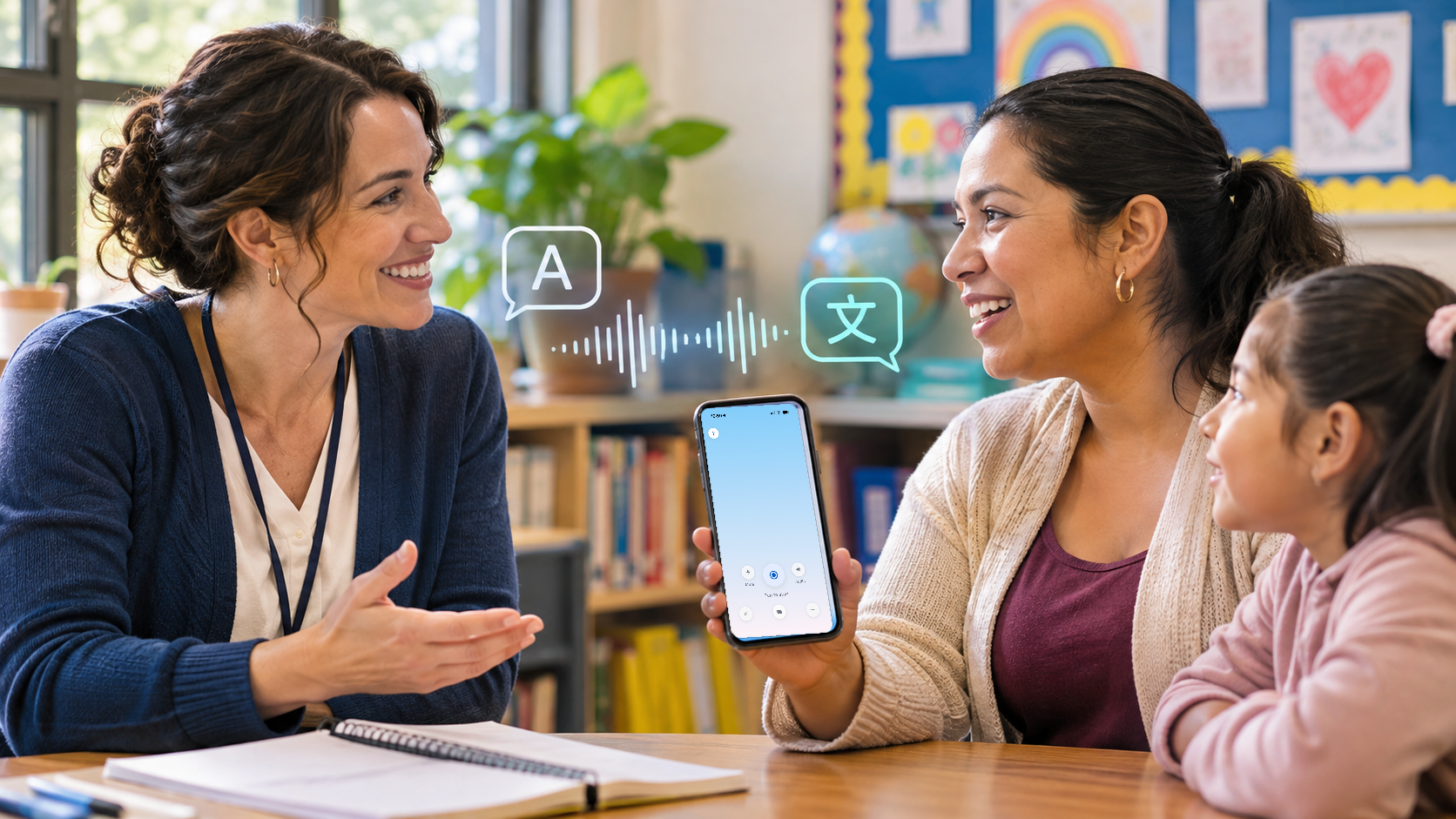
For example, an educator speaking English and a parent speaking Spanish can take turns communicating in their preferred languages.
It's worth distinguishing this technology from other language services. Written document translation is intended for materials such as school policies, forms, and reports. Human interpreters provide professional language assistance, including in sensitive situations where context, accuracy, and legal requirements are especially important.
AI voice translation serves a different purpose: helping people understand each other during spoken conversations. It can be useful for everyday communication, but it is not automatically a substitute for qualified interpretation.
Where can educational institutions use AI live translation?
The usefulness of AI translation depends largely on the situation. A brief administrative question requires a different level of accuracy and support than a meeting about a student's educational rights.
Here are several areas where educational institutions may benefit from real-time translation.
K-12 schools: Parent-teacher communication
Parent-teacher conferences are among the clearest applications of live AI translation.
Teachers regularly discuss classroom performance, assignments, attendance, and school activities with parents. When families and educators speak different languages, real-time translation can help both sides participate more actively.
Rather than limiting the conversation to prepared statements, parents can ask questions, request clarification, and respond in their preferred language.
The technology may also be useful during school events, informal classroom conversations, and routine interactions with staff.
For K-12 schools, the value lies in making two-way communication more accessible without requiring every everyday conversation to become a formally scheduled meeting. Schools must still provide appropriate language assistance whenever required.
School districts: Administrative and family services
School districts often manage communication needs that extend beyond individual classrooms.
Administrative employees may interact with multilingual families about transportation arrangements, enrollment procedures, school calendars, or general district services.
A real-time translation app can help staff answer routine questions and explain processes more clearly during face-to-face conversations.
Districts evaluating AI translation should also consider consistency across locations. If several schools use the same technology, staff should follow shared procedures for selecting languages, handling sensitive information, and requesting professional interpretation when necessary.
Importantly, live translation does not eliminate the need for accurate written translations of official documents or notices. Human-reviewed machine translation is becoming more relevant for school districts. For example, Massachusetts standards taking effect September 1, 2027 allow machine-translated school documents when a qualified School Translator reviews them before family delivery.
Universities and colleges: International student communication
Higher education institutions also serve multilingual communities, particularly through international student services and campus administration.
Real-time AI translation could support everyday conversations involving:
- International student orientation and general inquiries.
- Student services and campus administration.
- Housing and residence-life questions.
- Academic advising and routine administrative discussions.
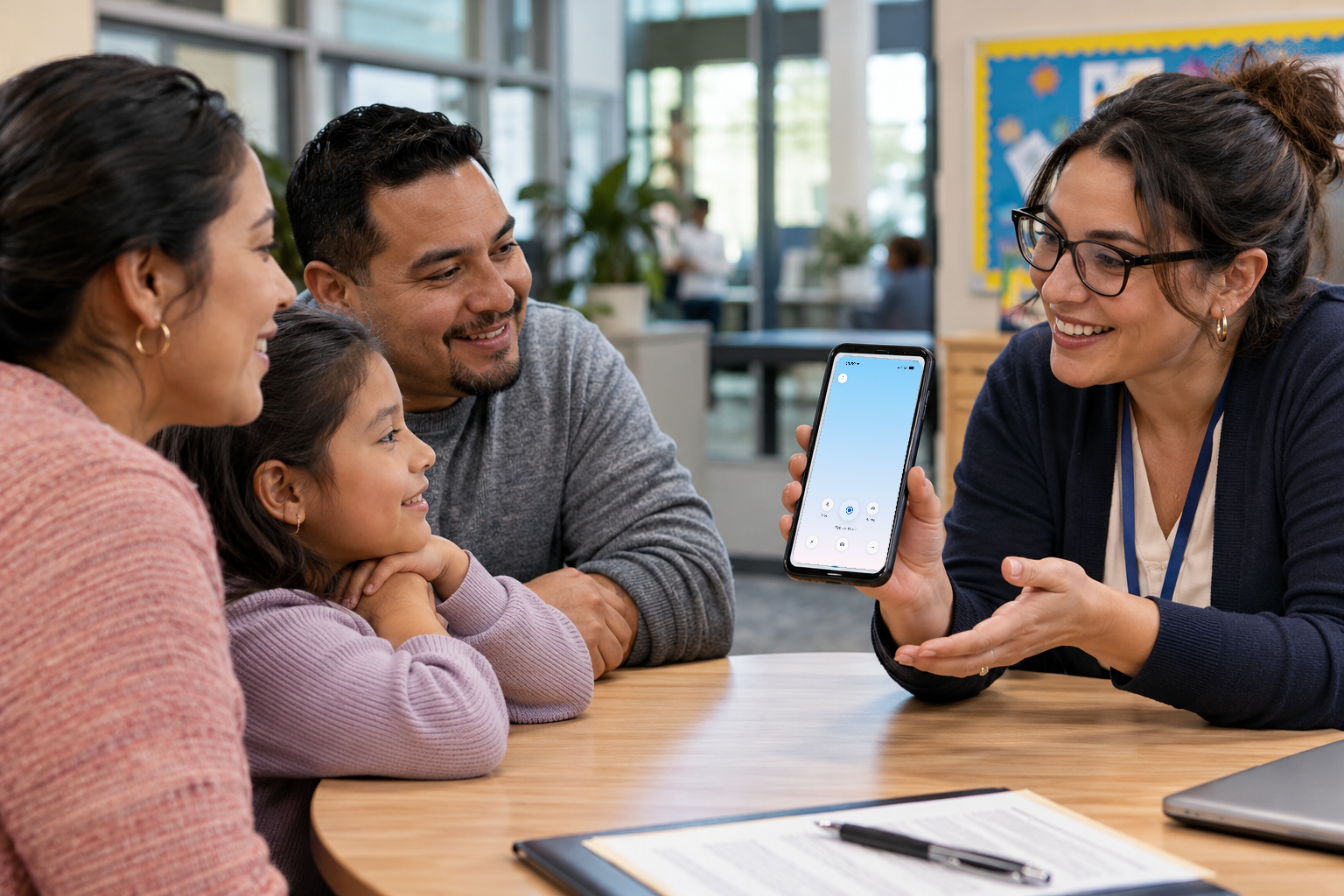
For example, a university staff member could use two-way voice translation to explain a campus procedure while allowing an international student to ask follow-up questions in their preferred language.
These applications are primarily suited to individual or small-group conversations. Tools designed for mobile, two-way communication should not be confused with systems built for simultaneous interpretation of large lectures or campus-wide events.
Universities must also consider applicable privacy requirements and provide appropriate language or accessibility support when necessary.
Special education and sensitive meetings
AI translation may provide supplemental communication support during certain special education discussions. However, these situations require particular care.
Individualized Education Program (IEP) meetings, formal evaluations, disciplinary matters, and discussions involving educational rights often include specialized terminology and significant decisions.
An inaccurate translation could change how a parent understands the options being discussed.
Educational institutions should not assume that an AI translation app satisfies applicable requirements for qualified interpretation. For sensitive or legally significant meetings, schools must follow their language-access, accessibility, and family participation obligations.
What should educational institutions look for in an AI live translation solution?
Choosing a translation app involves more than comparing feature lists. Institutions should evaluate how reliably the technology performs in real conversations and whether it meets their operational and privacy requirements.
The following factors are particularly important.
Translation accuracy and language support
The first consideration is whether the solution supports the languages your institution actually needs.
A school district serving families who speak Spanish, Arabic, Vietnamese, and Mandarin, for example, should evaluate translation quality in those specific languages rather than relying on a provider's total language count.
Accuracy can vary depending on the language pair, accent, speaking speed, and terminology.
Educational discussions also contain expressions that may be difficult to translate correctly. Terms such as accommodation, academic intervention, or learning assessment can have meanings that depend heavily on context.
An app might produce a grammatically correct translation without preserving the intended meaning.
Before choosing a solution, test it with realistic conversations involving the languages and terminology your institution regularly uses. Ask bilingual staff or qualified language professionals to review the results where possible.
Pay particular attention to names, dates, numbers, and statements that could affect important decisions.
Real-time, two-way communication
A useful educational translation app should support participation from both sides of the conversation.
Some tools are designed primarily to translate what one person says. Others allow two people to speak in different languages and receive translated responses.
For parent-teacher meetings and administrative conversations, two-way communication is especially valuable because participants need to ask questions and clarify information.
Consider whether the solution offers:
- Translated speech as well as readable on-screen text.
- Single-device or dual-device conversations.
- A straightforward interface that staff and families can use.
- Conversation settings that accommodate different speaking styles.
The experience should feel manageable for someone using the technology for the first time. An app with numerous features may offer little practical value if staff struggle to navigate it during an ordinary conversation.
Privacy, student data, and security
Educational conversations may involve grades, attendance, learning difficulties, family circumstances, and other personal information.
Before introducing an AI translation tool, institutions should understand how the provider handles that information.
Important questions include:
- Is information encrypted during transmission and storage?
- Are conversations recorded or stored automatically?
- Who can access saved transcripts or recordings?
- How long is information retained, and can it be deleted?
- Is content used to train AI models?
- Which third-party providers process the information?
In the United States, the Family Educational Rights and Privacy Act (FERPA) governs the handling and disclosure of protected student education records at institutions covered by the law, including eligible K-12 schools and postsecondary institutions.
The U.S. Department of Education advises educators to check with school or district administrators before introducing third-party applications that may handle student information.
An app's security features alone do not establish FERPA compliance. Institutions must evaluate the intended use, applicable agreements, permissions, and data-handling arrangements.
Read our guide to find out how to evaluate a FERPA-secure interpretation app.
Ease of use and flexible settings
Educational institutions need tools that work in their actual environments, not only under ideal testing conditions.
A quiet meeting room and a busy school office present different challenges for speech recognition.
Noise cancellation, headset compatibility, and flexible translation settings may help users adapt to different situations.
Institutions should also check practical requirements such as supported devices, internet connectivity, subscription features, accessibility, and available licensing arrangements.
Some AI translation applications allow users to select different speech-recognition or translation models. This flexibility can be useful because performance may vary across languages and conversation types.
The most suitable solution is one that staff can use reliably, without needing extensive technical knowledge.
Transcription and AI note-taking capabilities
Live translation is useful during a conversation, but educational staff may also need a way to review information afterward.
Some applications offer AI transcription and note-taking features that can support administrative meetings, voice notes, and follow-up tasks.
Saved transcripts may help staff review what was discussed, although important details should always be verified.
Institutions should establish clear rules before using these capabilities.
Recording a meeting may require consent, and saved transcripts containing student information may be subject to education-record and retention requirements. Administrators need to decide who can create, access, store, and delete these materials.
AI-generated transcripts and notes should be reviewed for accuracy before being used as official documentation.
When should educational institutions use human interpreters instead?
AI translation can be useful, but it has limitations.
Speech recognition may misunderstand unfamiliar terminology or struggle when several people speak at once. Translation models can also produce natural-sounding sentences that fail to preserve important details.
These limitations become more significant when conversations involve educational rights, consent, evaluations, or disciplinary decisions.
The U.S. Departments of Education and Justice have established guidance requiring schools to provide meaningful communication to parents with limited English proficiency. Schools must use appropriate and competent language assistance for communications covered by these obligations.
AI translation should therefore be considered a supplemental communication tool, not a universal replacement for qualified interpreters.
A useful distinction is between routine conversations and high-stakes discussions.
|
Communication scenario |
Recommended approach |
|
Routine school office inquiries |
AI translation may be appropriate |
|
Informal parent-teacher discussions |
AI translation may support communication, with verification |
|
General university service inquiries |
AI translation may be useful for routine assistance |
|
IEP meetings and formal evaluations |
Follow applicable qualified-interpreter and accessibility requirements |
|
Sensitive disciplinary or legal discussions |
Use appropriate professional language assistance |
|
Staff meeting notes and transcription |
Use approved tools with required consent and record-handling procedures |
Institutions should establish these boundaries before introducing AI translation, rather than leaving individual staff members to make difficult decisions during meetings.
How educational institutions can implement AI live translation
Introducing AI translation doesn't necessarily require a large technology project. However, a structured approach makes it easier to identify appropriate uses, assess performance, and establish safeguards.
1. Identify your institution's communication needs
Start by identifying where language support is most frequently needed.
Review the languages spoken by families and students, the departments that regularly interact with multilingual communities, and the types of conversations staff find difficult to manage.
For a K-12 district, parent-teacher communication and school office interactions might be the most relevant starting points.
For a university, international student services or general administrative inquiries may be suitable areas to explore.
2. Evaluate tools against institutional requirements
Once the use cases are clear, compare solutions using consistent evaluation criteria.
Consider supported languages, translation quality, ease of use, privacy practices, and available features.
Involve IT, administrative, and privacy personnel early in the process. They can help determine whether a tool fits the institution's technical environment and data-handling requirements.
If the institution intends to purchase access for multiple employees, confirm licensing arrangements and account-management options directly with the provider.
3. Test translation quality in realistic environments
A short pilot can reveal issues that a product demonstration might not show.
Test the solution using common language pairs and representative educational terminology. Include different speaking speeds, accents, and environments.
Where possible, evaluate translations with bilingual staff or qualified reviewers.
Look beyond whether a translation appears fluent. Check whether it preserves the speaker's intent and allows both participants to understand the conversation.
Use fictional or appropriately de-identified examples during initial testing rather than exposing unnecessary student information.
4. Establish privacy and appropriate-use guidelines
Before making the tool available to staff, create straightforward rules covering:
- Which conversations are suitable for AI translation.
- When professional interpretation must be requested.
- Whether recording or transcript saving is permitted.
- How required consent should be obtained.
- Who can access and retain conversation records.
These procedures should reflect applicable laws, institutional policies, and the specific technology being used.
5. Train staff and review results
Even an intuitive translation app benefits from a short introduction.
Staff should know how to select languages, use available conversation modes, improve audio quality, and recognize possible translation errors.
They should also understand when to pause and verify information or move to qualified interpretation.
After the pilot, collect feedback from employees and participating families or students.
Did conversations become easier to manage? Were important details communicated correctly? Did users encounter difficulties with specific languages or terminology?
These observations can guide a broader rollout and help the institution decide where AI translation provides meaningful value.
A quick checklist for evaluating AI translation apps
Before selecting a solution, ask the following questions:
- Language support: Does it reliably support the languages our students, families, and staff use?
- Conversation experience: Can participants communicate in both directions using spoken translation and readable text?
- Accuracy: Have we tested relevant educational terminology and realistic conversations?
- Privacy: Do we understand how data is processed, stored, shared, and deleted?
- Ease of use: Can staff use the application with minimal training?
- Flexibility: Does it support the devices and conversation settings we need?
- Documentation: Are transcription and note-taking features available if required?
- Appropriate use: Do we have clear procedures for recording consent, verification, and qualified human interpretation?
An institution that can answer these questions is better prepared to choose technology suited to its communication needs.
How PairaVoice supports AI live translation in education
PairaVoice is a real-time AI voice translation and live interpretation app designed for professional multilingual communication, with a particular focus on K-12 school communities and healthcare environments.
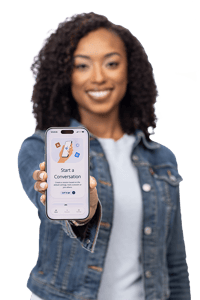
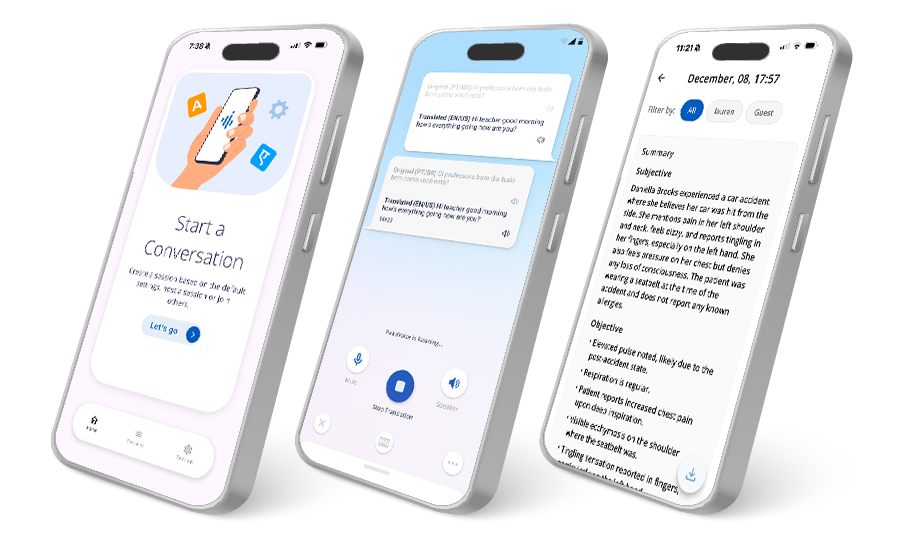
It combines two-way spoken translation, readable on-screen text, and flexible AI settings in a mobile application.
For educational institutions, these capabilities can support everyday conversations between educators, administrators, school staff, students, and families.
Real-time AI voice translation and live interpretation
PairaVoice allows two people who speak different languages to communicate through translated speech and text.
Users can follow translations on-screen and listen to spoken responses, making the app useful for conversations where both participants need to ask questions and respond.
The application supports single-device and dual-device conversations, allowing users to choose a setup that fits the situation.
Potential education applications include parent-teacher conferences, general school office inquiries, and routine school-family communication.
Flexible AI translation settings
Different conversations may require different translation settings.
PairaVoice allows users to select supported AI speech-recognition and translation models and choose between streaming and batch translation modes.
Streaming mode supports a more continuous conversational flow, while batch mode processes longer segments after a speaker finishes a thought.
The app also offers optional noise cancellation, voice personalization, and compatible earbud use.
These options can help educators and staff adjust the experience to their environment, language pair, and communication preferences.
As with any AI translation technology, important details should be verified, and translation quality should be tested for the intended use.
AI note-taking and transcription
Beyond live translation, PairaVoice includes standalone AI note-taking and transcription features.
School administrators and staff can use Notes mode to capture spoken information without starting a translation session.
Pro also provides saved and searchable transcripts that can support meeting follow-up when appropriate.
These capabilities may be useful for staff meetings, administrative voice notes, and permitted parent-teacher conference documentation.
Any use involving recording or saved transcripts should follow the institution's consent, privacy, access, and retention requirements.
Privacy-conscious communication
Privacy is an important consideration when selecting technology for educational environments.
PairaVoice uses encryption in transit and at rest to help protect customer data. We also don't provide customer content to third-party AI providers to train their general-purpose models. More information is available in our Privacy Policy.
PairaVoice is designed to support FERPA-aligned education workflows, but each institution remains responsible for assessing its intended use, applicable agreements, permissions, and student-data requirements.
For IEP meetings and other high-stakes conversations, schools should continue to follow applicable requirements for qualified interpreters and verification of important information.
Frequently asked questions about AI live translation for educational institutions
Can AI live translation replace human interpreters in schools?
Not in every situation. AI translation can support routine conversations, but it does not automatically meet legal or institutional requirements for qualified interpretation. Schools should provide appropriate language assistance whenever required and establish clear procedures for high-stakes discussions.
Can AI live translation be used during IEP meetings?
AI translation may provide supplemental communication support, but schools must follow applicable requirements for qualified interpretation, accessibility, consent, and meaningful family participation. Automated translation should not be assumed sufficient for important IEP decisions.
Is AI live translation FERPA compliant?
FERPA compliance depends on how a covered educational institution uses a particular technology and handles protected student information. Schools and universities should review the provider's data practices, applicable agreements, and institutional requirements rather than relying on a general compliance claim.
Can educational institutions record and transcribe translated conversations?
Some translation applications offer recording and transcription features, including PairaVoice Pro. Whether these features may be used depends on applicable consent rules, institutional policies, privacy requirements, and record-retention procedures. Saved transcripts should be reviewed for accuracy before being relied upon.
Choosing AI translation that fits your institution's needs
AI live translation creates new possibilities for multilingual communication across educational institutions.
For K-12 schools, it can support everyday conversations between educators and families. District administrators can explore its use for routine service inquiries, while colleges and universities may find applications in international student support and campus administration.
The important question is whether the technology works reliably in the situations your institution encounters, protects sensitive information appropriately, and fits alongside existing language-access services.
By evaluating accuracy, supported languages, privacy practices, usability, and transcription capabilities, educational institutions can make more informed decisions about introducing AI translation.
Looking for a real-time AI voice translation solution for educational communication?
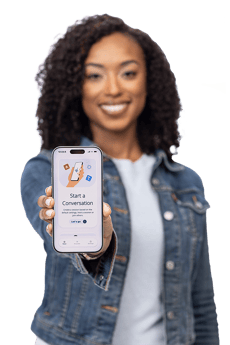
Explore PairaVoice to learn how two-way live interpretation, flexible conversation settings, and PairaVoice Pro note-taking can support multilingual conversations across your educational community.