
















 ChatGPT
 Google AI
 Perplexity
 Claude
 Grok
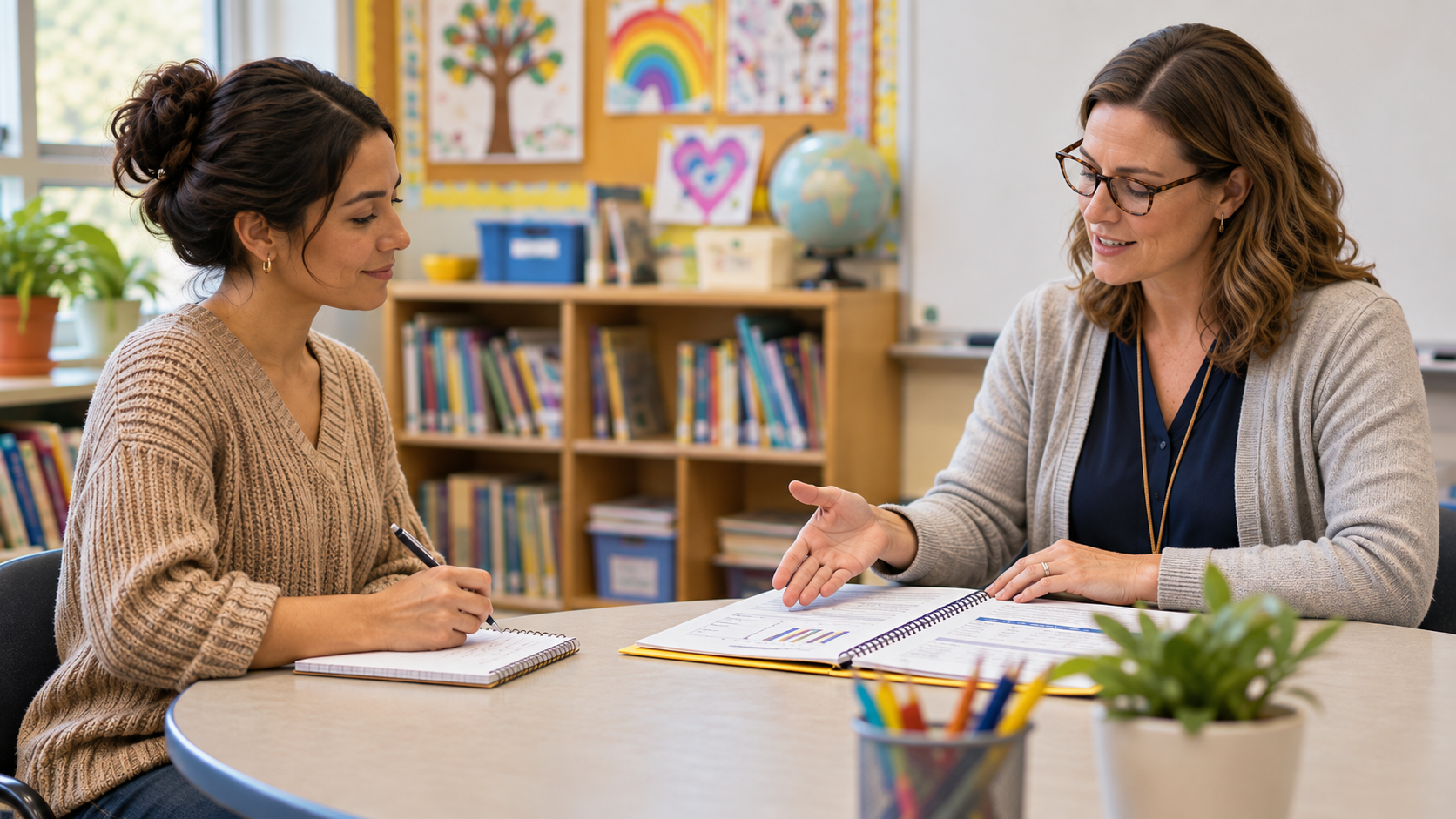
You're sitting across from your child's teacher at a parent-teacher conference. The teacher explains how your child is doing in class, mentions a few areas that need attention, and suggests some ways you can help at home.
You understand most of it. But not quite everything.
Was the teacher saying your child might need extra support, or that they definitely will? Did you understand the homework instructions correctly? You want to ask, but finding the right words in English takes time, and the conversation has already moved on.
This is where real-time AI voice translation and live interpretation apps can help. Instead of struggling through a conversation or relying on someone else to translate, you could use your phone to communicate with the teacher in your preferred language.
But there's a reasonable question to ask before trusting an app with something as important as your child's education: How accurate is AI translation, and when is it safe to rely on it?
How AI translation is changing parent-teacher communication
Translation apps have come a long way from the days of typing individual words into a dictionary.
Today, AI-powered voice translation apps can listen to someone speaking, convert their words into text, translate them into another language, and read the translation aloud. Some allow two people to have a back-and-forth conversation using their own languages.
For parents, that opens up possibilities that weren't always convenient or readily available.
Imagine stopping by your child's classroom to ask about an upcoming assignment. The teacher speaks in English, and you listen to the translated response in Spanish. You can then ask a follow-up question in Spanish and have it translated back into English.
There's no need to prepare everything you want to say in advance.
These tools can also help during school events, informal conversations with staff, or meetings about your child's academic progress. Some apps include transcription features, allowing you to read the words being spoken instead of relying entirely on audio.
Of course, being able to translate a conversation doesn't automatically mean every part of it has been understood correctly. That's where parents need to pay closer attention.
Can parents trust AI translation apps? Benefits and limitations
The short answer is yes, AI translation can be useful for school communication. But it shouldn't be treated as infallible.
A translation can sound perfectly natural while getting an important detail wrong. And when you're discussing your child's education, even a small misunderstanding can matter.
Where AI Translation Can Help
One of the biggest advantages of AI translation is its availability.
You don't necessarily need to arrange a translation session in advance just to ask a teacher a quick question. If you have a suitable app on your phone, you can begin a conversation when the opportunity comes up.
That can make everyday interactions feel less intimidating.
Perhaps you want to ask why your child has been assigned additional reading exercises. Maybe you need clarification about a field trip, or you want to understand what your child's teacher means by a particular classroom activity.
Instead of leaving with unanswered questions, you can ask them there and then.
Real-time translation can also make conversations more interactive. Rather than listening to a long explanation and hoping you've understood it, you can respond, ask for examples, and check details as the discussion develops.
That two-way communication is what makes these tools especially interesting for parents.
Where AI Translation Can Make Mistakes
The problem with AI translation isn't always that it produces obvious nonsense. Sometimes the result sounds convincing even when the meaning has changed.
Consider a teacher saying:
"Your child may benefit from additional reading support next semester."
Now imagine the translation changes may benefit to will need.
Those two statements carry different meanings. One suggests an option worth considering; the other sounds like a definite requirement.
Educational conversations are full of these distinctions. A teacher might say a student is making progress but still needs practice, or that an evaluation could be helpful without necessarily recommending one.
AI translation systems can struggle with these differences, particularly when context is missing.
An Education Week investigation published in September 2026 highlighted concerns among educators and researchers about AI translations that sound accurate but miss the speaker's intent or cultural context.
There's also the practical side of speech recognition. A noisy classroom, several people speaking at once, or an unfamiliar school acronym can interfere with the original transcription. If the app mishears a word, the translation may be wrong before it even begins.
This doesn't mean you should avoid AI translation altogether. If a statement sounds confusing or unexpectedly serious, ask the teacher to repeat it in simpler language. For particularly important information, request written confirmation or a qualified interpreter.
When Is a Human Interpreter the Better Choice?
Not every conversation with a school carries the same level of importance.
If you're checking when school finishes on Friday, an AI translation app may be perfectly reasonable.
If you're discussing a formal evaluation, a disciplinary decision, or your child's eligibility for special education services, the stakes are different.
These conversations can involve specialized terminology, legal rights, and decisions that affect your child's education for years.
A qualified human interpreter can ask for clarification, recognize when a term has a particular educational meaning, and help prevent misunderstandings that an automated translation system might miss.
In the United States, public schools also have obligations to communicate important school-related information to parents with limited English proficiency in a language they can understand. Depending on the circumstances, that can include providing appropriate language assistance rather than expecting parents to find their own solution.
You shouldn't feel pressured to use an app, bring a family member, or ask your child to interpret an important meeting.
For a conversation involving your child's educational rights or services, ask the school what qualified interpretation support is available. AI can still be useful for preparing questions beforehand, but it shouldn't be the only thing standing between you and a decision you need to understand. For IEP-related discussions and other high-stakes school meetings, AI translation should be treated as a supplemental communication tool, not a replacement for qualified interpretation when it is required.
Is AI translation safe for conversations about your child?
Accuracy isn't the only issue worth considering.
School conversations can involve personal information: grades, attendance records, learning difficulties, behavioral concerns, or family circumstances. You may not want that information stored in an unfamiliar app.
Before using an AI translation tool for a school meeting, take a few minutes to look at its privacy policy.
Find out whether the app saves recordings or transcripts automatically, how long that information is retained, and whether you can delete it. It's also worth checking whether conversation data may be used to improve or train AI systems.
Don't assume that every translation app handles information in the same way.
Another point to consider is consent. Recording a conversation may require permission under local laws or school policies, even when your intention is simply to remember what was discussed.
If you're planning to save a transcript of a parent-teacher meeting, ask the teacher beforehand and check the school's rules.
For example, PairaVoice uses encryption in transit and at rest to help protect your data. We also don't provide customer content to third-party AI providers to train their general-purpose models. You can learn more about how we handle your information in our Privacy Policy.
A useful translation app should make communication easier without creating new concerns about your family's privacy.
5 tips for using AI translation during parent-teacher meetings
A little preparation can make a noticeable difference to how well an AI translation app performs.
1. Find a quiet place to talk
Speech recognition works best when the app can clearly hear the person speaking.
If possible, move away from busy hallways, playground noise, or overlapping conversations. Even a relatively small amount of background noise can cause an app to mishear names and important details.
2. Speak clearly and take turns
You don't need to speak unnaturally slowly, but it's helpful to pause between speakers.
Rather than asking several questions at once, try one question, wait for the translation, and then continue.
This also allows you to notice if something hasn't translated correctly.
3. Ask for plain language
Schools use terminology that can be confusing even when everyone speaks the same language.
If a teacher uses a term you don't recognize, ask them to explain it in everyday language before translating it again.
You might say, "Could you give me an example of what that means for my child?"
That question is often more useful than simply repeating the unfamiliar word.
4. Confirm important details before leaving
Before the meeting ends, go over anything you need to remember.
For example:
"Just to confirm, we should practice reading for 15 minutes each evening, and we'll meet again next month. Is that correct?"
This gives the teacher an opportunity to correct any misunderstanding.
For significant decisions or instructions, ask for a written summary in a language you understand.
5. Know when to request an interpreter
If the discussion becomes too complicated, emotional, or difficult to follow, you can ask to continue with qualified interpretation support.
There's no reason to force your way through an important conversation when you're unsure what's being said.
Technology should help you participate, not make you responsible for catching every possible translation error.
How PairaVoice can support multilingual school communication
If you're looking for a way to communicate with teachers in different languages, PairaVoice is one option designed for conversations in settings including education.
PairaVoice is a mobile parent-teacher translation app that supports multilingual communication without requiring both people to speak the same language.
Real-Time Two-Way Voice Translation
Rather than typing each sentence into a separate translation tool, PairaVoice supports real-time AI voice translation for parents and teachers.
For example, a teacher could explain an upcoming classroom project in English, while a parent follows the translation in their preferred language. The parent could then ask their own questions and have those translated back to the teacher.
Speech-to-Text Transcription
PairaVoice also includes speech-to-text transcription, which can be helpful when you prefer to read what's being said.
PairaVoice Pro goes beyond live translation with standalone AI note-taking and transcription. Parents and school staff can use these features to capture conversations and revisit important information, where recording and retention are permitted. Saved, searchable transcripts can also help with follow-up after meetings.
For a parent trying to remember homework instructions or the date of an upcoming school event, that kind of reference may be useful.
As with any recording or transcript, it's important to get the necessary permission and avoid saving sensitive student information without appropriate safeguards.
Built With Professional Communication in Mind
PairaVoice is designed for multilingual conversations in professional environments, including schools.
Its features include voice playback, optional noise cancellation, and different ways to use the app during conversations. Those options may be helpful in busy school environments where communication doesn't always happen in a quiet meeting room.
PairaVoice also offers flexible conversation settings, including selectable AI speech-recognition and translation models, streaming or batch modes, and support for conversations using one or two devices. These options allow parents and educators to choose a setup that suits their communication needs.
Still, the same principles apply to PairaVoice as to any AI translation app: check important details, review the privacy settings, and use qualified human interpretation when the situation requires it.
Final thoughts: AI translation can help parents stay connected to their child's education
You shouldn't have to leave a parent-teacher meeting wondering whether you understood something correctly.
AI translation apps offer a practical way to make everyday school conversations easier, especially when a quick question or an unexpected discussion might otherwise be difficult.
But trust doesn't mean accepting every translated sentence without question.
For routine conversations, a voice translation app may be all you need. When the discussion involves an important decision about your child's education, it's reasonable to ask for additional support.
The best translation tool is one that helps you ask questions, understand the answers, and know when something needs clarification.
Want to make everyday school conversations easier? Explore PairaVoice to learn how real-time voice translation and transcription can support communication between parents and teachers.