

/PairaVoice-Start-A-Conversation-nobg-md.png?width=200&height=300&name=PairaVoice-Start-A-Conversation-nobg-md.png)




















.png)

.png)


 ChatGPT
 Google AI
 Perplexity
 Claude
 Grok
GrokIn 2026, the translation industry continues to transform at record speed. Artificial intelligence (AI) isn’t just improving workflows. It’s reshaping how organizations think about global communication, content operations, and multilingual customer experience.
But this new era isn’t simply about bigger or faster technology. It’s about smarter, more secure, and more context-aware translation ecosystems.
Whether you lead a localization team, manage enterprise content, or operate in a regulated industry, the translation industry trends in 2026 will meaningfully shape how you serve global audiences.

Translation industry market snapshot
The global language services market reached ~$71.7 billion in 2024 and is continuing to expand as AI adoption rises. How will you plan budgets, workflows, and technology stacks for the years ahead while taking advantage of this market growth?
What we’ll explore
Today, we’ll explore the key translation industry trends shaping 2026, including:
- How adaptive AI and document-level translation are changing translation workflows
- Why ethical AI, security, and compliance are now baseline expectations
- How real-time and multimedia multilingual communication continue to evolve
- What effective localization looks like in a more global, accessible content landscape
2026 translation industry trends to watch
1. Adaptive AI takes center stage (most impactful translation trend in 2026)
AI has moved from a “tool” to a “translation collaborator.” In 2026, adaptive AI systems will start to learn dynamically from user edits, brand voice guidelines, terminology sets, and Translation Memory.
This updated learning structure will be producing output that feels personalized, consistent, and context-aware.
Last Year
In 2025, we first saw the shift from AI as a tool to AI as a true collaborator. Translators were increasingly leaning on AI for repetitive tasks, allowing them to focus on creativity and complex problem-solving. It was not just about accuracy, but synergy.
What’s New for 2026
Emerging multi-agent and document-level AI systems are beginning to influence how enterprise translation platforms like Pairaphrase evolve. This is especially true around context handling and quality evaluation.
- Multi-agent translation systems collaborate to improve coherence and stylistic accuracy across entire documents.
- Document-level translation is now a standard expectation, reducing fragmentation and inconsistencies.
- LLM-based automatic evaluation metrics help teams benchmark quality and continuously refine outputs.
Why the adaptive AI trend matters
Adaptive AI helps enterprises scale translations without sacrificing nuance. This is a true necessity for teams delivering high-volume content across multiple regions.
Recent research also highlights how large reasoning models (LRMs) and multi-agent approaches can improve Machine Translation by strengthening document-level coherence and enabling more robust error checking. This emphasizes the broader shift in 2026.
Specific adaptive AI translation trends to watch in 2026+
- Native “reasoning-based” AI translation models
- Personalized translation profiles per department or brand
- Real-time adaptive tuning during human review
2. Ethical AI and data privacy become non-negotiable
As AI usage grows, enterprises are scrutinizing how translation AI is governed. This includes:
- where data goes
- whether customer content is used for model training
- what transparency exists around model behavior
In 2026, responsible AI expectations are shifting from “nice to have” to a procurement requirement, especially for teams translating sensitive or regulated content.
See how Pairaphrase’s responsible AI policy empowers organizations to harness AI in their translation process with peace of mind. For example, Pairaphrase does not return your data to the engines and models it uses.
2026 developments with ethical AI and data privacy
- Clearer AI governance policies (what data is used, what isn’t, and why)
- Greater demand for transparency and accountability (e.g., model-use disclosures, reviewability)
- Stronger expectations for human oversight in high-stakes or brand-sensitive translation workflows
Why it matters
Ethical AI is now a trust issue. Buyers want confidence that translation outputs and workflows are responsible, explainable, and appropriate for the content’s risk level.
What to watch in 2026+
- Vendor AI governance becoming part of standard procurement scoring
- Sector guidance tightening (healthcare, education, finance)
- Increased emphasis on risk-based workflows (what must be reviewed by humans)
3. Real-time multilingual communication
From multilingual meetings to global live events, organizations expect seamless translation across voice, video, and chat— in real time. This trend focuses on live, in-the-moment conversations where immediacy, accuracy, and trust are critical.
Last year
2025 took this trend a step further, with AI-driven real-time speech-to-speech translation and voice synthesis, enabling seamless multilingual conversations across industries.
This translation trend in 2026 takes a larger leap
- Voice cloning safeguards to prevent misuse and protect privacy
- Real-time speech-to-speech translation with better fidelity
- Meeting “AI copilots” that summarize conversations in multiple languages
Big takeaway for real-time multilingual communication
Hybrid workplaces and global operations depend on frictionless multilingual communication.
For example, platforms like Pairaphrase are continuously building tools to help teams handle the speech and content workflows that sit around real-time multilingual communication.
Pairaphrase’s newest tool, PairaVoice, is designed specifically for secure, real-time multilingual conversations in settings like healthcare and education. This ranges from transcribing live speech to text and translating live speech to speech.. More on this later.
What to watch in 2026+
- Real-time compliance checks for sensitive conversations
- Editable, AI-generated multilingual meeting transcripts
- Personalized voice output for diverse speakers
4. Hyper-localization moves beyond words
In 2026, hyper-localization now considers cultural nuance, regional slang, sentiment trends, accessibility norms, and societal context.
Last year
Hyper-localization in 2025 expanded by incorporating cultural trends, regional slang, and societal nuances for content that feels personal and profoundly relevant.
2026 expansion
In 2026, the hyper-localization trend goes one step further and fine-tunes.
- AI cultural analytics monitor shifts in regional trends.
- Content is tested against local UX expectations and inclusive design guidelines.
- Localization expands into eLearning, customer support, interactive apps, and product UX.
Why this trend is critical
One-size-fits-all messaging risks alienating audiences, especially in culturally sensitive markets.
What to watch in 2026+
- Sentiment-aware AI localization
- AI-powered persona and region modeling
- Micro-localization for multilingual customer experience
5. AI-augmented human translation becomes the norm
Despite the rapid evolution of AI, one fact remains: machines can’t 100% replicate human creativity and cultural intuition. In 2026, humans handle strategy, nuance, and creativity.
In practice, an AI translation agent embedded in a segment-editing interface can support post-editing. It can suggest clearer phrasing and helps reviewers resolve tricky passages much faster.
2026 enhancements
Together, AI and human translation teams form the modern enterprise workflow in 2026.
- Linguists’ roles evolve to include AI supervision and cultural consulting.
- Human-in-the-loop validation becomes required for regulated content.
- Faster translation turnaround without compromising brand integrity.
Why it matters
The combination of AI and human translation offers scalability and authenticity, especially in industries where misinterpretation carries risk.
6. Audio translation expands to multimedia
As global content shifts toward video, audio, and interactive media, translation needs now extend well beyond text.
So organizations increasingly need to rely on speech transcription, subtitles, and voice-over translation to localize webinars, training videos, and recorded meetings.
Platforms like Pairaphrase support these workflows by handling audio, video, and subtitle files within the same secure translation environment used for documents.
Last year
In 2025, the focus was on integrating audio translation into enterprise workflows and consumer applications, streamlining communication for diverse audiences.
In 2026, multimodal translation, across voice, video, and visuals, is one of the fastest-growing areas in 2026. Unlike real-time communication, this trend centers on recorded and reusable content that must scale across channels and audiences.
What’s accelerating in 2026
- Automated captioning and subtitle generation
- Podcast, webinar, and livestream translation
- Multilingual accessibility compliance
- Integration with customer support call centers
Why this 2026 trend matters
Customers expect inclusive, accessible, multilingual media experiences — and businesses must deliver them.

7. Specialized AI for niche industries start to accelerate
In 2026, translation demand continues to grow in regulated and terminology-heavy industries such as healthcare, legal, education, and finance.
Rather than relying on generic Machine Translation, organizations prioritize platforms that support Translation Memory, glossaries, and secure document handling to maintain accuracy and consistency in translations.
Pairaphrase enables teams to adapt AI output over time while meeting enterprise security and compliance expectations.
The 2026 push for specialized AI translations
- Sector-specific benchmarks emerging
- AI-assisted risk detection in sensitive translations
- Regulatory pressure for auditability and traceability
Why it matters
High-stakes content demands precision far beyond generic MT. For example, tools like Pairaphrase help teams translate full documents while also preserving formatting and applying terminology controls that matter in legal, medical, and technical workflows.
8. The human touch: essentials for brand identity & creative content
Automation cannot replace emotional nuance, storytelling, or brand consistency. While AI accelerates translation, human review remains critical for brand-sensitive and creative content.
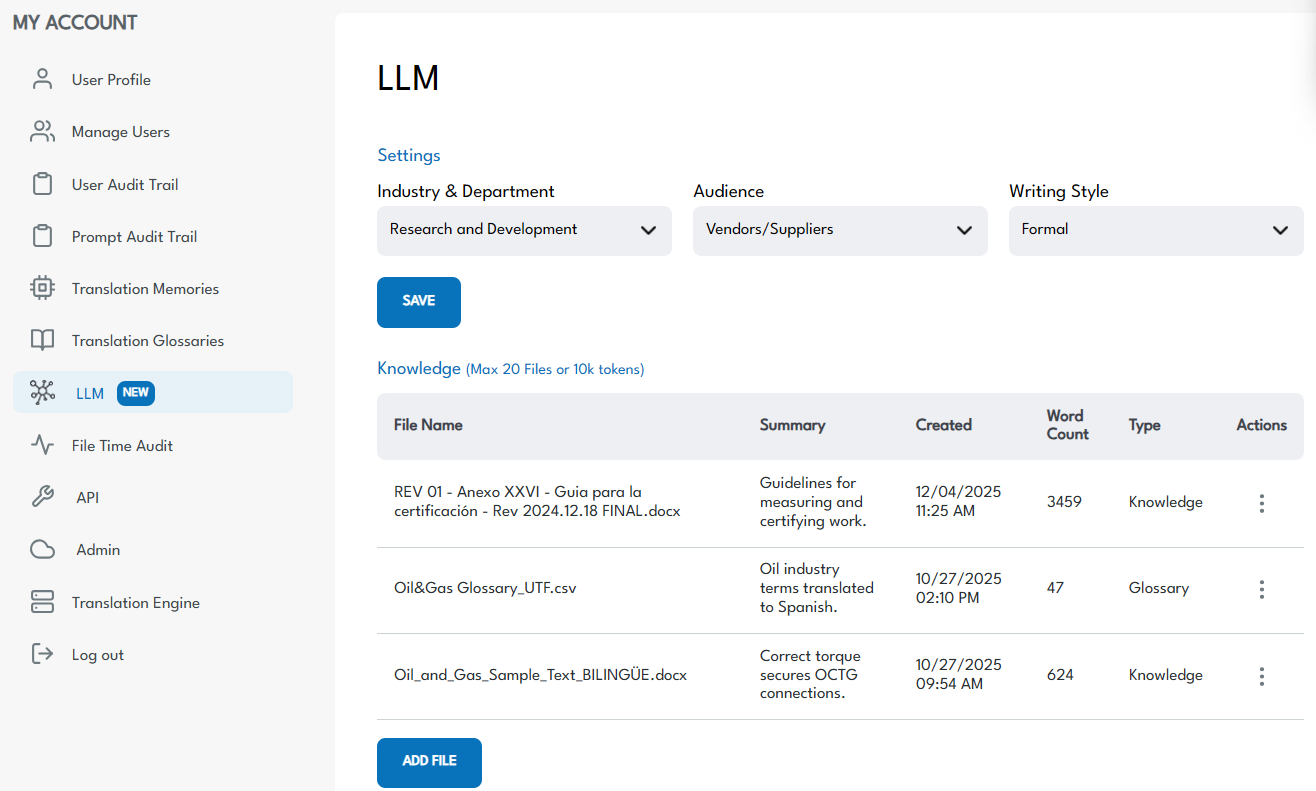
Organizations should rely on linguists to refine tone, preserve cultural nuance, and ensure messaging aligns with brand voice across markets. Find tools that support this hybrid approach by combining AI-powered translation with collaborative editing and terminology control.
Some platforms also support model training on approved language and style guidance, helping teams reinforce brand voice and preferred phrasing across markets.
The 2026 extension
As we expected in the start of 2025, AI and human collaboration has thrived, with humans taking the lead in certain areas. In 2026, linguists and cultural strategists remain essential.
- Minimized AI hallucination prevention for creative assets
- Human verification of tone-sensitive marketing materials
- Increased investment in creative post-editing services
For more creative or tone-sensitive work, a secure AI Sandbox environment like the one in Pairaphrase can help teams test phrasing, explore transcreation options, and refine voice before final human review.
9. Continuous translation becomes a standard in SaaS
As SaaS platforms expand globally, translation is becoming a continuous process rather than a one-time task.
Teams increasingly integrate translation into ongoing content and product updates, ensuring localized versions launch alongside new features. For example, Pairaphrase supports this shift by handling structured file formats and enabling repeatable, scalable translation workflows.
2026 Enhancements
In 2026, global SaaS platforms should explore continuous localization to ensure features launch in all markets at once.
- AI-driven regression detection across localized UI text
- Automated source change detection
- Faster release cycles without increasing localization overhead
Why it's transformative
It removes friction between product development and global growth.
10. AI in quality assurance starts to improve and expand
AI is increasingly used to support translation quality assurance by identifying inconsistencies, missing content, and terminology issues early in the workflow. These tools will help reviewers focus on high-impact decisions rather than manual error checking.
Within platforms like Pairaphrase, Translation Memory, glossaries, and AI-assisted review already play a key role in maintaining consistency at scale. LLM-based evaluation and multi-agent QA will now help teams catch inconsistencies before human review.
In 2025, we saw AI stepping into the quality assurance role directly, using Machine Learning to identify errors, inconsistencies, and formatting issues before humans even get involved.
What’s new for 2026
In 2026, AI in QA goes one step further:
- Document-level scoring for coherence and tone
- Automated style-guide compliance checking
- AI reviewers that flag risky or ambiguous phrasing
Why you should care
QA automation reduces manual review cycles while increasing consistency across large volumes of content.
As document-level translation becomes more common, evaluation is evolving too. The growing use of model-based and LLM-based metrics reflect real translation quality. For enterprise teams, this signals a shift toward more measurable, auditable QA.
11. Translation analytics becomes a core enterprise strategy
Organizations want data, not just output. Stepping into 2026, translation leaders are placing greater emphasis on visibility into translation activity, reuse, and quality trends. Translation analytics is also becoming more practical outside of large enterprises.
Analytics help organizations understand where content is being translated, what is reused, and how workflows can be optimized over time. Translation platforms are increasingly serving as centralized systems of record for multilingual content operations.
Translation strategy is no longer just about speed, but guided by metrics, traceability, and repeatable evaluation.
2026 momentum
- Quality metrics integrated directly into translation workflows
- Dashboards showing cost savings, reuse rates, and risk categories
- Predictive analytics for forecasting translation workloads
Why it matters
Analytics create transparency, align stakeholders, and help justify budgets.
12. Workforce shifts: new roles, new skills, new risks
AI isn’t eliminating translators— it’s reshaping the profession. Translators increasingly act as reviewers, quality specialists, and AI supervisors, focusing on nuance and accuracy instead of raw throughput.
Organizations that invest in upskilling and hybrid workflows are better positioned to scale without sacrificing quality in 2026.
2026 trends
- Growth in roles like AI supervisors, cultural stewards, and QA specialists
- Shortage of linguists in highly specialized fields
- Increased training for translators in AI and analytics tools
Challenges
Over-reliance on AI risks subtle errors slipping through, especially cultural or contextual inaccuracies.
13. Compliance, security & responsible AI take center stage
In 2026, enterprise translation tools are increasingly evaluated like any other system handling sensitive documents: buyers expect security controls, auditability, and clear data-handling practices that can pass IT and compliance review.
This trend is less about AI ethics in principle and more about operational readiness — meeting internal policies for access control, retention, and oversight.
2026 developments
- Encryption and secure workflows as baseline expectations
- Role-based access and auditability requirements that support governance
- Data retention controls and, in some cases, data residency expectations
- Stronger vendor reviews (security questionnaires, compliance documentation, risk assessments)
Why it matters
Enterprises can’t risk improper handling of legal, medical, HR, or financial content. Compliance teams increasingly require proof that translation workflows are controlled and reviewable.
That’s why platforms positioned for enterprise use, including Pairaphrase, emphasize governed workflows and security controls that align with these expectations.
Translation challenges to watch in 2026
As AI becomes more deeply embedded in translation workflows, organizations are also paying closer attention to the risks and trade-offs that come with increased automation. Below are some challenges in translation for 2026:
- Translator workforce impact: As AI quality improves, demand for traditional translation roles and bilingual hiring may shift, with greater emphasis on reviewers, specialists, and AI-literate linguists.
- Over-reliance on AI: Heavy dependence on automated translation can lead to quality lapses, cultural misalignment, or hallucinations—particularly in creative or sensitive content.
- Bias in Machine Translation: Model bias remains a concern, especially for underrepresented languages or regions with limited training data.
- Compliance risks: Automated workflows can introduce risk if auditability, access controls, or review requirements are not properly enforced.
- Talent gaps in niche domains: While volume translation scales, shortages persist in highly specialized subject areas that still require deep human expertise.
Forward-looking predictions: what to watch in 2026+
Enterprise buyers are increasingly focused on how translation technology will mature, not just how fast it performs today. Several clear signals are emerging as organizations plan for the next phase of AI-enabled translation.
- Broader adoption of multi-agent AI translation and review systems to improve document-level coherence and error detection
- Growth in analytics-driven translation QA, with metrics and traceability guiding quality and workflow decisions
- Rising demand for multimedia and accessibility localization, including captions, subtitles, and inclusive content formats
- Stricter compliance expectations around data handling, auditability, and responsible AI use
- Reshaping of the translation workforce, with more in-house or platform-based hybrid teams combining AI, analytics, and human review
What this 2026 translation industry forecast means for Language Service Providers
For Language Service Providers (LSPs), now also being referred to as “Language Solutions Integrators,” these 2026 translation industry trends signal a shift in how value is created and delivered.
As AI accelerates throughput, differentiation increasingly comes from workflow design, domain expertise, governance, and client trust—not raw translation speed alone.
LSPs that evolve into technology-enabled partners by integrating secure AI platforms, adaptive quality controls, and human-in-the-loop services will be better positioned to:
- scale margins
- meet enterprise procurement expectations
- support clients navigating regulated, high-volume multilingual content environments
Conclusion
The translation industry in 2026 is defined by intelligent automation, ethical AI, inclusivity, and a renewed emphasis on human creativity. Technology is accelerating, but enterprise expectations are also rising just as quickly.
Staying ahead means investing in tools and workflows that balance AI efficiency with human insight. Stay ahead while prioritizing compliance, cultural accuracy, and global customer experience.
If you're planning for 2026 and beyond, now is the time to evaluate how these translation industry trends will shape your strategy.
Ready to modernize your translation operations? Let’s talk about how these 2026 translation trends can strengthen your global communication.
Incorporate AI into your 2026 translation workflow
Want to get started with the best translation software at the forefront of AI translation industry trends in 2026? Try Pairaphrase. It’s the AI Translation Management System for teams that value smarter, faster and safer translation.

Pairaphrase supports over 140+ languages and 20,000+ language pairs. Translate into Spanish, English, French, German, Arabic, Hindi, Chinese, Japanese and more. Not to mention, Pairaphrase performs file translation for 25+ file types.
Just one translation with Pairaphrase can cover your annual subscription!
Get Started
Schedule a demo or share this article with a colleague.
"We found with Pairaphrase a way to master translation costs through a dedicated subscription plan. This tool allows us to focus on reviews, and time is also under control. Pairaphrase team is always listening to feedback and regularly provides solutions and enhancements of the tool. Thank you."
- Jean-Philippe Quint, Technical Training Engineering & Technical Communication @ Carestream Dental

Reviewed by

Founder and CTO
He is Co-Founder and CTO of Pairaphrase and a leader in translation technology with more than two decades of experience improving how organizations communicate across languages. His work focuses on making multilingual communication more accurate, efficient, and accessible through AI-driven translation solutions, practical innovation, and a strong emphasis on usability, quality, and security.